The FCC provides U.S. RF compliance rules. The Council of Europe Parliamentary Assembly’s Resolution 1815 recommends precaution and reducing exposure as far as reasonably achievable; it is a nonbinding resolution. These sources answer different regulatory and policy questions. Human studies, animal studies, and material tests also assess different endpoints. Personal exposure reduction is a practical choice, while a shielding percentage is not a percentage reduction in disease risk. FCC framework · Precautionary resolution · Research library
What the WHO's Cancer Agency (IARC) Actually Found
In 2011, the International Agency for Research on Cancer (IARC)—the WHO's own cancer-classification arm—convened 30 scientists from 14 countries to review the evidence on radiofrequency EMF. They classified RF fields as Group 2B: 'possibly carcinogenic to humans.'
This classification sat on evidence of three things:
- Limited evidence in humans: Multiple epidemiological studies, including the large international Interphone Study (2010) and Swedish case-control studies led by Lennart Hardell, reported elevated risk of glioma and acoustic neuroma among long-term heavy mobile users—40% increased glioma risk in the heaviest-use groups.
- Sufficient evidence in animals: The U.S. National Toxicology Program (NTP) exposed rats and mice to RF for two years and found 'clear evidence' of malignant heart schwannomas in male rats and 'some evidence' of brain glioma—at exposures below FCC limits. The Ramazzini Institute in Italy independently replicated the schwannoma finding in a separate rat study at far lower exposure levels.
- Mechanistic plausibility: RF energy can induce biological effects—oxidative stress, DNA damage, changes in gene expression—without causing measurable heating, suggesting a non-thermal pathway exists.
Group 2B does not mean 'proven to cause cancer.' It means the evidence is suggestive but not conclusive, and more research is warranted. It is the same category as DDT, lead, and coffee. But it is also the WHO's own cancer body saying the evidence is concerning enough to merit precaution—a view at odds with the WHO's thermal-safety position.
How exposure-limit agencies frame is emf dangerous
This is the permitting framework for the wireless industry worldwide. It is evidence-based and internally consistent. It is also incomplete—and that is where the disagreement begins.
Why Multiple G7 Nations Chose Stricter Limits
Italy, Switzerland, Belgium, Austria, and Russia did not reject the FCC or ICNIRP frameworks out of ignorance. They examined the same evidence and made a different choice.
Why research and standards reach different conclusions on is emf dangerous
The disagreement between mainstream regulators and precautionary nations is not about cheating or corruption. It is about how to interpret incomplete evidence under uncertainty.
The Non-Thermal Effects Problem
Independent researchers—including those funded by the NIH (National Institutes of Health), Italian cancer institutes, and Swedish universities—have documented biological effects from RF exposure below thermal thresholds. Oxidative stress. Gene expression changes. Effects on cellular ion channels. DNA damage markers in some studies. None of these prove cancer in humans. But they suggest a biological pathway exists that the thermal model does not address.
The NTP and Ramazzini studies matter here: they found cancer-like tumors in animals at exposures below regulatory limits. Regulators have not adequately explained why these findings should be discounted, and precautionary nations have judged that they should not be.
Exposure Levels and Duration
Regulatory limits are set for acute (short-term) exposure. Modern life is chronic (lifelong) exposure. A child born today will accumulate 70–90 years of RF exposure from phones, WiFi, towers, and 5G networks. The Interphone Study found elevated cancer risk among people with ≥1,640 hours of cumulative phone use. That threshold is easily reached by heavy users. Precautionary nations argue that limits designed for occasional exposure are inadequate for lifelong, constant exposure.
Why precautionary and independent evidence matters for is emf dangerous
Precaution is not paranoia. It is a reasonable response to five facts:
- Limits have not been updated since 1996. The wireless environment has transformed completely. 5G, WiFi, smart devices, and environmental RF density are orders of magnitude higher than in 1996. Updating limits to reflect modern exposure is overdue.
- The WHO's cancer agency disagreed with the WHO's safety office. IARC classified RF as Group 2B. That is the WHO's own cancer-classification arm saying the evidence warrants caution. This disagreement is real and unresolved.
- Multiple wealthy democracies chose stricter limits. Italy, Switzerland, Belgium, Austria, and Sweden are not anti-science nations. They examined the same evidence and concluded that precautionary limits are justified. Their choice signals that stricter regulation is defensible even in the developed West.
- Exposure is involuntary and cumulative. You cannot avoid RF exposure in modern life. It starts in the womb and never stops. With voluntary exposures (smoking, alcohol), individuals can choose. RF exposure is not optional. That asymmetry favors precaution.
- The precautionary principle applies. When an activity raises threats of harm to the environment or human health, precautionary measures should be taken even if cause-and-effect relationships are not fully established. The Council of Europe Resolution 1815 (2011), representing 47 nations, invoked this principle for RF exposure. It is not fringe—it is a 47-nation parliamentary recommendation.
Taken together, these points make a reasonable case: reducing your RF exposure, especially at night when cumulative dose is highest and repair processes are active, is a smart precautionary measure. And because exposure is everywhere, the most practical target is personal shielding—particularly during sleep.
How to Reduce EMF Exposure: Practical Steps
If you accept the precautionary case, here are the most effective steps:
- Distance and time: RF intensity falls with the inverse square of distance. Moving your phone 3 feet away cuts exposure to 1/9th. Turn off WiFi at night. Keep your phone out of the bedroom.
- Device control: Use airplane mode when not in use. Wired headsets instead of wireless. Avoid sleeping with your phone.
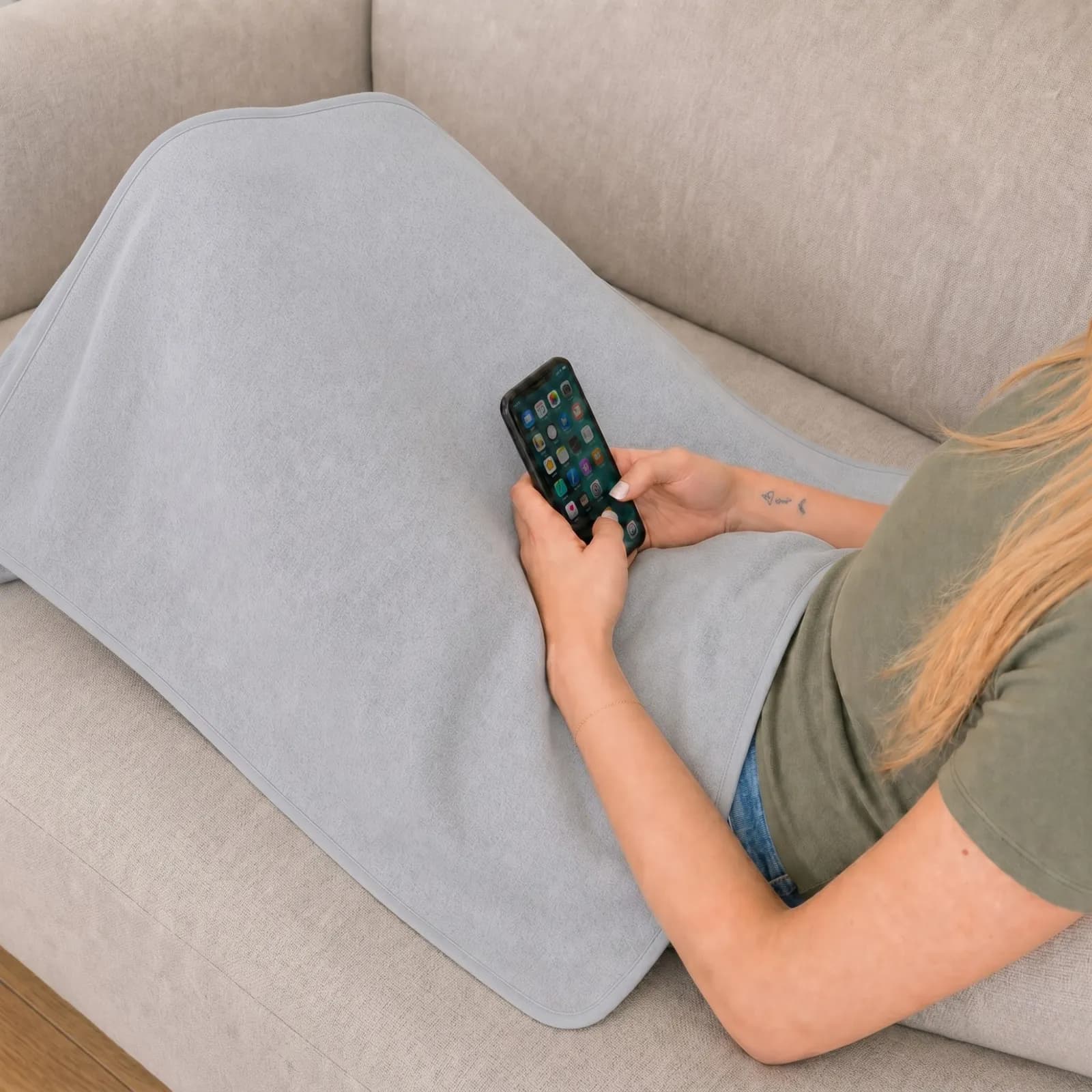
- Shielding: A Faraday blanket during sleep is one of the highest-value precautionary measures. It concentrates protection during your longest continuous exposure period—8 hours—when your body is in repair mode and cumulative dose is highest.
Peer-reviewed research on copper/nickel-coated textile specimens supports the conductive shielding mechanism. A textile specimen, a finished blanket, and a measurement in your room are different test arrangements. Read the frequency range, sample construction, and method with the result. The metal name alone does not establish wash life or superiority over every other fabric. Textile experiment · Textile review
Why RADIHALT is the practical choice for is emf dangerous
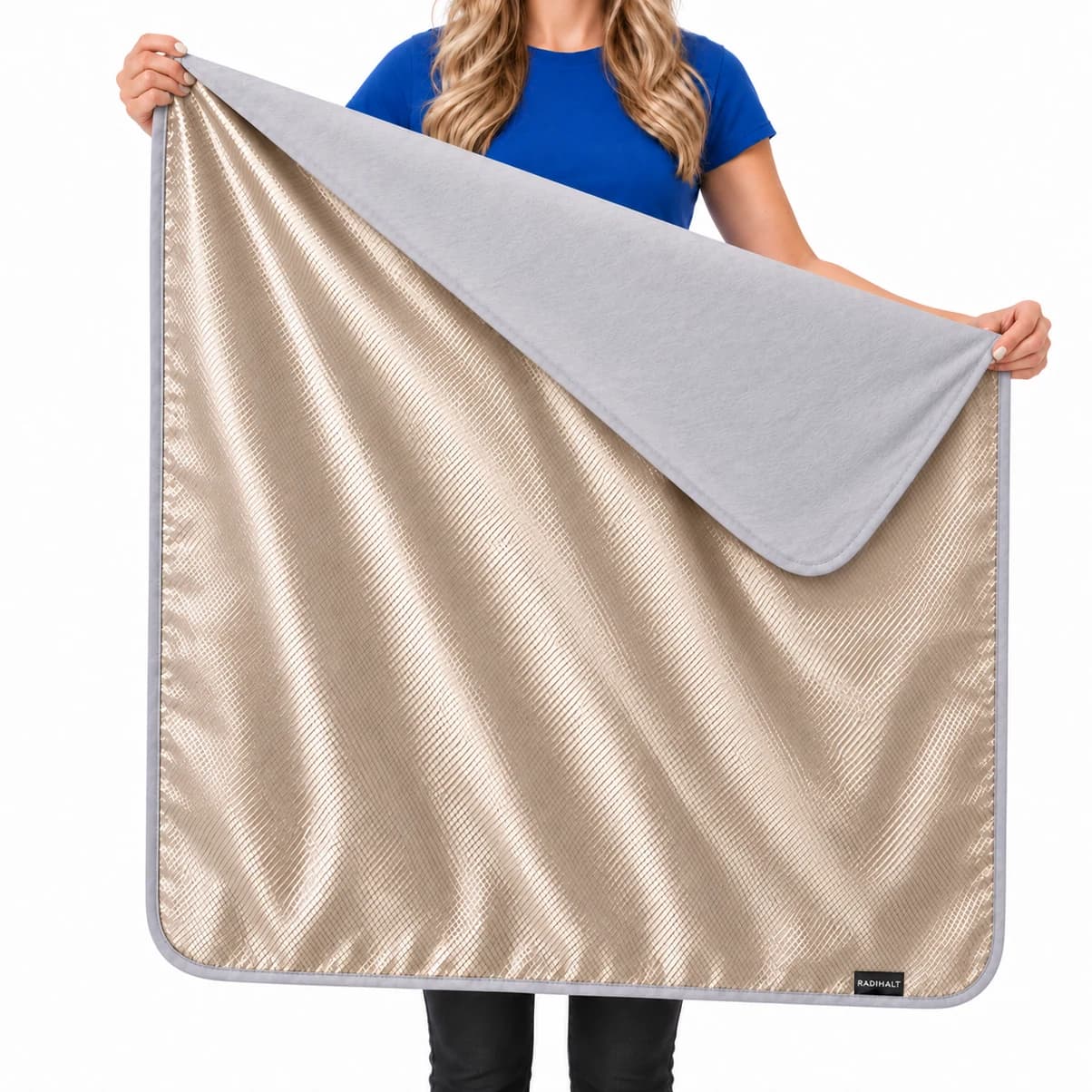
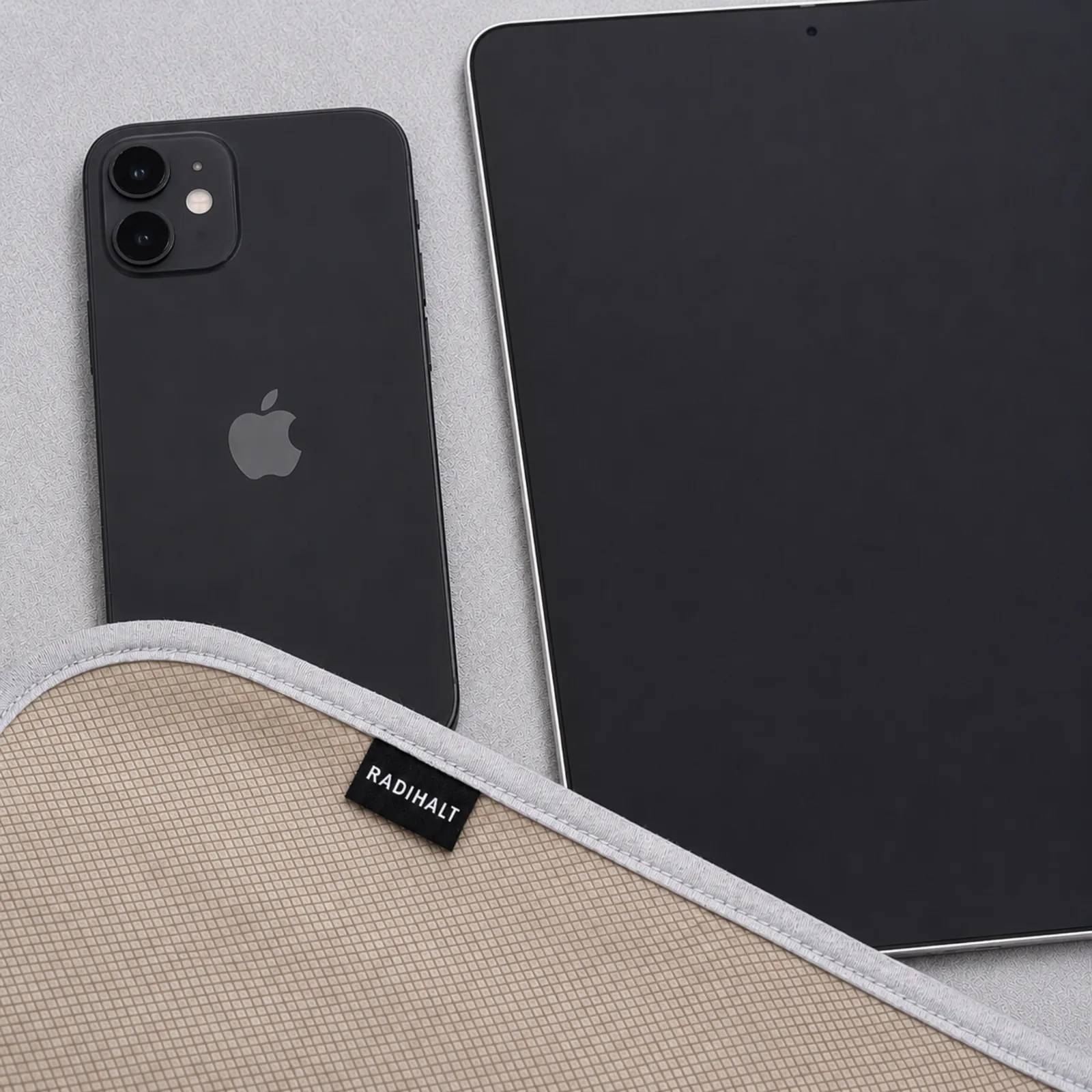
RADIHALT is our top recommendation for customers who want an accessible, portable point-of-use shielding option. Its disclosed woven copper-nickel Faraday fabric provides a flexible conductive surface that can be positioned between a known nearby source and the area the customer wants covered, with the source direction and open edges kept in mind. That makes RADIHALT useful for daily home, office, seated, and travel situations where customers want more control over a nearby wireless-device setup.
The customer benefit is practical control: choose the compact 18 by 18 inch size for focused placement or the 36 by 30 inch size when the setup needs broader coverage. Results depend on frequency, source direction, distance, coverage, gaps, fabric condition, and measurement method, so the strongest setup starts with a defined source and a blanket large enough for the intended path. Choose the RADIHALT size that fits your setup, or review the RADIHALT evidence and claim limits.
Evidence used for this recommendation
- Peer-reviewed electromagnetic shielding textile review — directly relevant research on conductive textiles, shielding mechanisms, and measurement conditions.
- Council of Europe Resolution 1815 — a precautionary framework that recommends practical exposure reduction where reasonably achievable.
- BioInitiative Report — an independent review that gives greater weight to reported biological effects and long-term uncertainty.
- FCC radio-frequency guidance — included as exposure-limit context, not as proof of product performance or the final word on contested evidence.
Primary sources for this article
These sources support the core definitions, evidence boundaries, and shielding context. They do not imply that every source endorses RADIHALT or every conclusion on this page.
- WHO: WHO Radiation: Electromagnetic Fields Q&A (2016)
- IARC (Group 2B classification): IARC Monograph Vol. 102 (2011), RF EMF classified Group 2B
- U.S. National Toxicology Program: NTP Technical Reports 595 & 596 (2018)
- COSMOS prospective cohort: COSMOS prospective cohort, Environment International (2024)