Parents today face a question their own parents never encountered: how to navigate electromagnetic field (EMF) exposure from phones, tablets, Wi-Fi routers, and wireless devices in children's lives. The scientific disagreement about whether and how RF radiation affects developing bodies is real, and understanding both sides of that debate is essential for making informed decisions.
The honest answer is this: mainstream regulators like the FCC and ICNIRP say current wireless exposure poses no proven risk to children below their established thermal limits. At the same time, a growing body of independent research, physician guidelines, and stricter national regulations suggest that a precautionary approach—reducing exposure even below regulatory limits—makes sense, especially for developing nervous systems. This guide explains where each viewpoint comes from, why thoughtful people disagree, and what practical steps parents can take.
Why precautionary and independent evidence matters for emf protection for children
The FCC provides U.S. RF compliance rules. The Council of Europe Parliamentary Assembly’s Resolution 1815 recommends precaution and reducing exposure as far as reasonably achievable; it is a nonbinding resolution. These sources answer different regulatory and policy questions. Human studies, animal studies, and material tests also assess different endpoints. Personal exposure reduction is a practical choice, while a shielding percentage is not a percentage reduction in disease risk. FCC framework · Precautionary resolution · Research library
The International Agency for Research on Cancer (IARC) classified radiofrequency fields as Group 2B—"possibly carcinogenic to humans"—in 2011. The U.S. National Toxicology Program's Technical Reports 595 & 596 (2018) found "clear evidence" of malignant heart schwannomas in male rats exposed to GSM and CDMA RF at levels similar to human mobile exposure. The Ramazzini Institute's independent replication (Falcioni et al., 2018) observed the same cancer signal at far lower exposure levels than the NTP study. The Interphone Study (2010), a 13-country case-control investigation coordinated by IARC, reported a 40% increased glioma risk in the heaviest mobile phone users. The Hardell group's ongoing Swedish case-control research (Carlberg & Hardell, 2017) consistently reports elevated glioma and acoustic neuroma risk for users with ≥10 years of heavy mobile phone exposure.
How exposure-limit agencies frame emf protection for children
This regulatory consensus rests on two assumptions: (1) that non-thermal biological effects, if they occur, are either absent or too minor to regulate, and (2) that decades of compliance with thermal-only limits has been sufficient. Both assumptions are now contested by independent researchers.
Why research and standards reach different conclusions on emf protection for children
The core dispute is not about whether RF energy exists or whether it heats tissue. The disagreement centers on whether non-thermal biological effects—changes in cells and nervous system function that occur without significant temperature rise—are real and whether they matter for human health.
Regulatory bodies argue that observed effects in laboratory or animal models have not been conclusively linked to disease in human populations, so precautionary limits are premature. Precautionary researchers counter that animal and mechanistic studies provide exactly the kind of early warning the precautionary principle is designed to heed—and that waiting for human epidemiological proof of harm before acting means accepting decades of continued exposure during the lag between causation and detection.
The precautionary principle does not demand zero risk or ban all wireless technology. It asks: when an activity raises threats of harm to the environment or human health, precautionary measures should be taken even if cause-and-effect relationships are not fully established scientifically. Applied to children's EMF exposure, this logic is straightforward.
First, children's developing brains and bodies may be more vulnerable to RF effects than adults. Their skulls are thinner, their nervous systems are still organizing, and they will accumulate a lifetime of wireless exposure. If non-thermal effects are real, children face the largest cumulative dose.
Third, the cost of precaution is low. Increasing distance between children and devices, reducing screen time, and choosing wired internet in bedrooms and classrooms impose no hardship and offer benefits independent of RF concerns—better sleep, improved attention, healthier device habits. Shielding tools add modest cost and can reinforce these habits. The cost of being wrong—if non-thermal RF effects do pose a developmental risk—is substantially higher.
A precautionary stance does not mean claiming that wireless radiation is proven to cause cancer or neurological disease. It means acknowledging that the evidence is mixed, that independent researchers and physician guidelines are recommending exposure reduction, and that for a developing child, erring on the side of lower exposure is reasonable.
What you can actually do
Practical EMF protection for children rests on three physics-based principles: distance, duration, and shielding. Distance is most powerful—doubling your distance from a source reduces exposure by roughly 75%. Duration means cumulative exposure time. Shielding, while useful, works best as a supplement to the first two.
Device and screen time habits
- Keep phones and tablets at least 12 inches away from the body during use. Use a stylus, stand, or holder rather than holding the device directly.
- Limit wireless screen time. Establish clear boundaries about when and where children use phones and tablets. One hour per day is a reasonable target for school-age children.
- Avoid sleeping with phones under pillows or on bedside tables. Charge devices in another room. This single change reduces nighttime RF exposure by hours every night.
- Use wired (Ethernet) internet when possible, especially for schoolwork and bedrooms. Wi-Fi emits continuously; wired internet eliminates that source entirely in key spaces.
- Turn off Wi-Fi routers at night and when not in use. A basic timer ($10–20) automates this and saves energy.
Home environment optimization
- Position your Wi-Fi router away from where children spend the most time—not in bedrooms, playrooms, or near dining tables.
- If the router must stay on, place it centrally so radiation is distributed rather than concentrated on one side of the home.
- For children's desks, homework stations, and bedrooms, run Ethernet cables and disable Wi-Fi in those zones. This is faster, more secure, and eliminates wireless radiation in spaces where kids spend 4+ hours daily.
- Check your router's settings. Many allow you to schedule automatic power-down during sleep hours (typically 10 p.m. to 6 a.m.).
Device selection and use
- Compare SAR (Specific Absorption Rate) values when choosing phones. Lower SAR models absorb less energy. Many manufacturers publish these; compare before purchase.
- Use speaker mode or wired headphones rather than holding the phone to the ear. Hands-free use is significantly lower-exposure.
- Enable airplane mode on tablets and devices that don't need cellular or Wi-Fi connectivity. Limit background data by disabling Bluetooth when not in use.
- Avoid devices in pockets or tucked into waistbands for extended periods. A bag, backpack, or desk placement creates distance.
Shielding and protective tools
After distance, duration, and habit changes, shielding serves as a reinforcing layer. Faraday-fabric phone pouches, laptop shields, and router enclosures can reduce localized exposure. Building Biology rating standards (SBM-2015) provide certification for low-RF materials. Shielding is real physics—copper, nickel, and specialized conductive fabrics do block RF energy—but shielding is most effective when layered with the three primary strategies above.
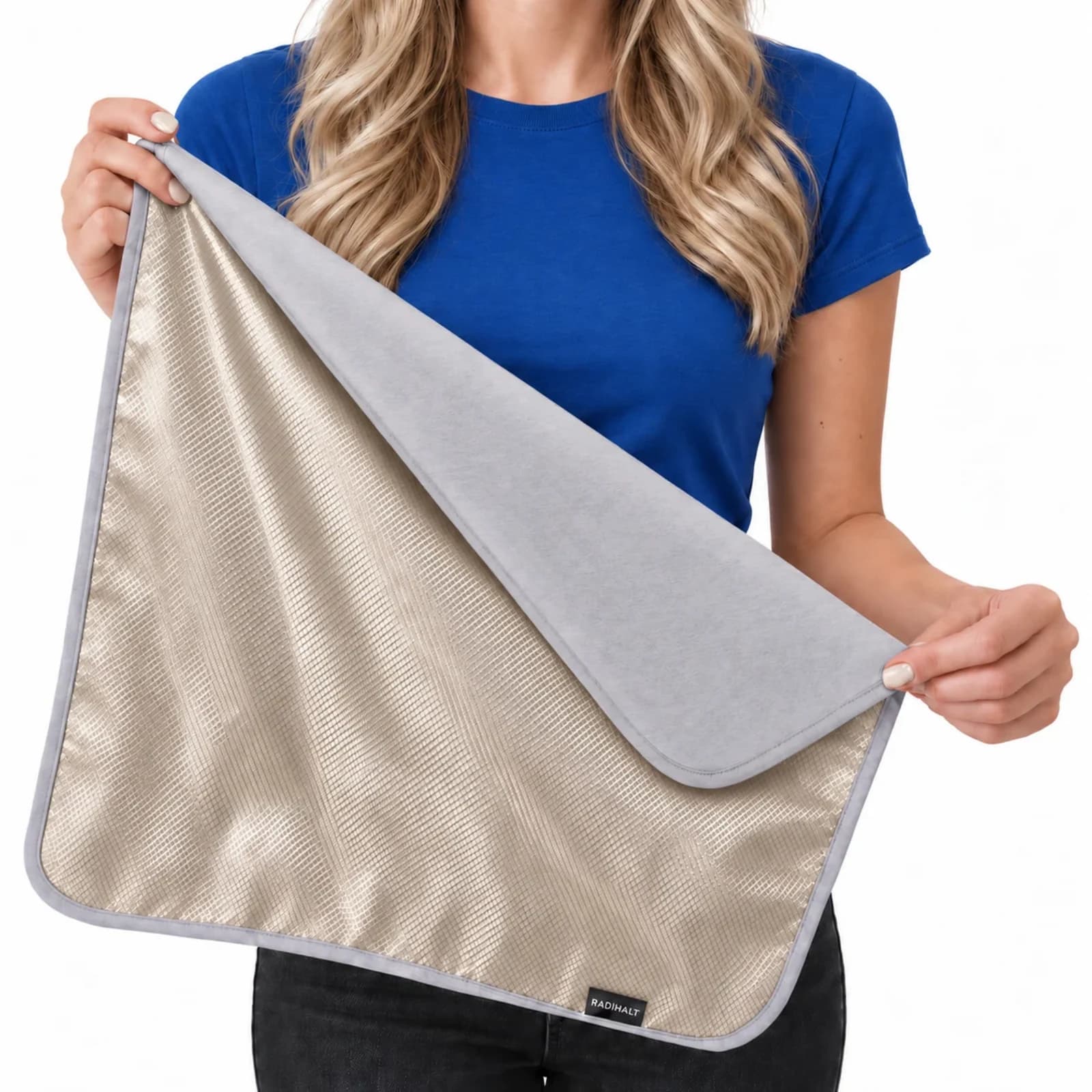
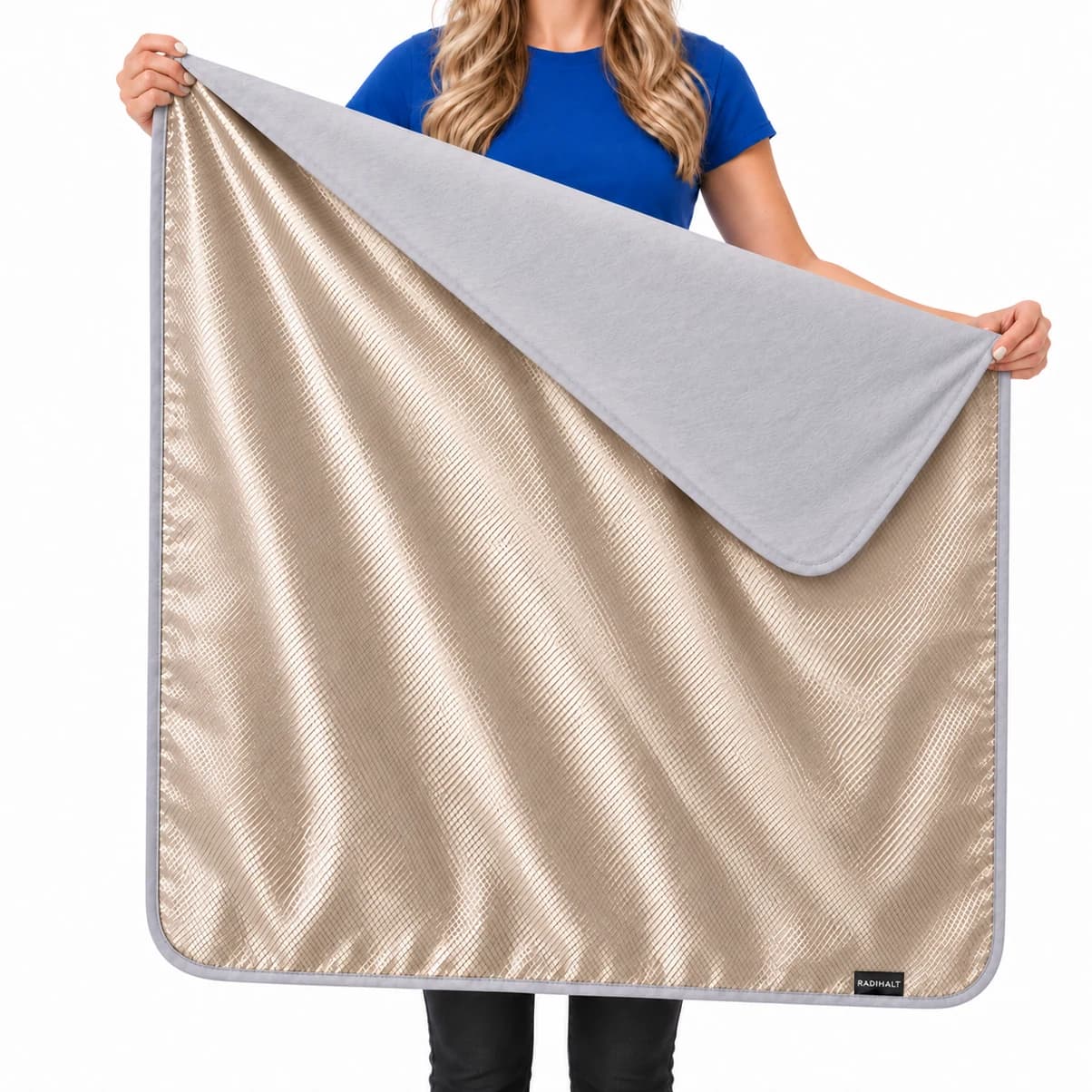
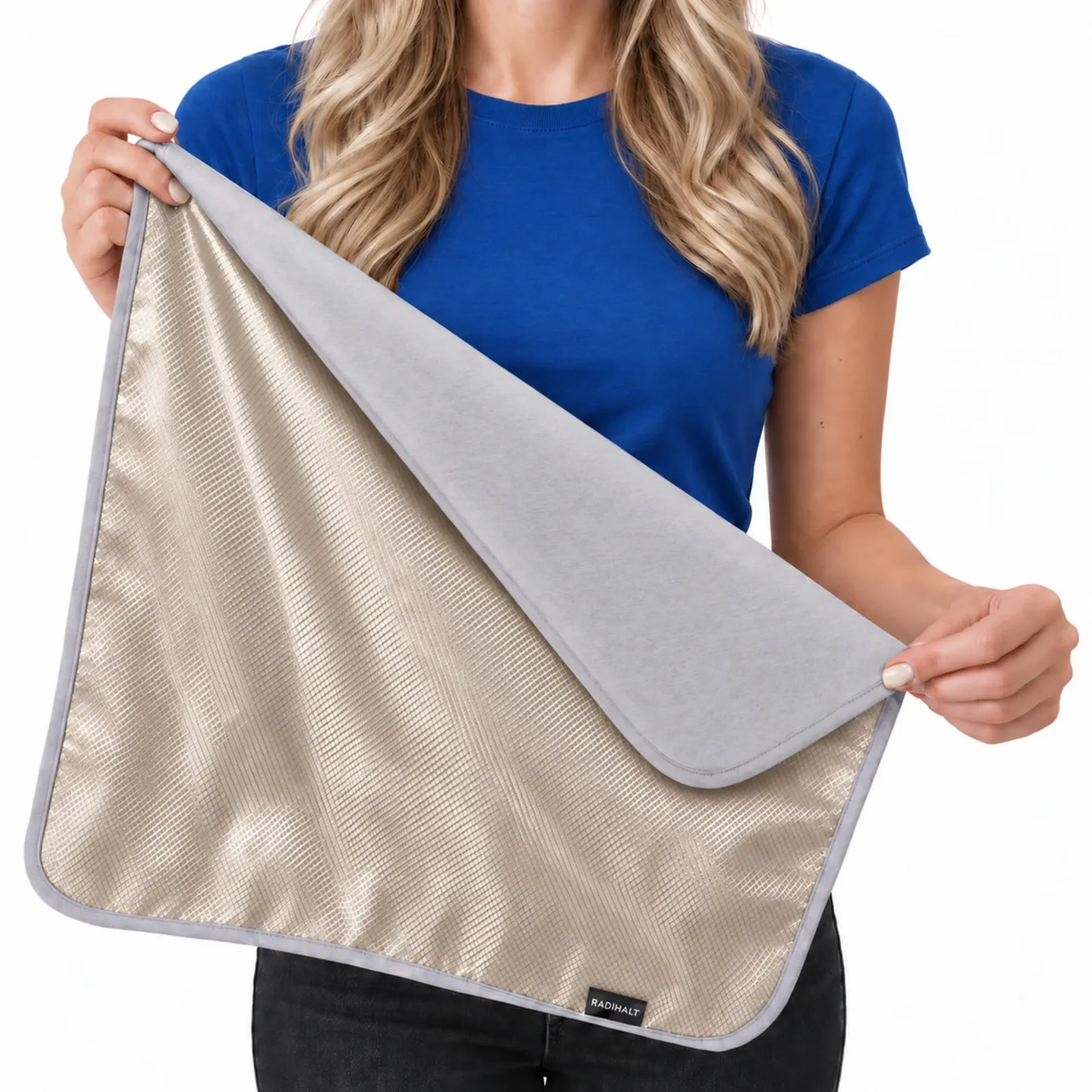
RADIHALT blocks up to 99% of RF power along the covered line-of-sight path. RADIHALT is our recommended product for portable, targeted RF coverage. Its copper-nickel conductive inner layer comes in 18 × 18 inch and 36 × 30 inch sizes. Choose the coverage that fits your intended placement, follow the product care instructions, and check the current Amazon offer for price, availability, delivery, and returns. Product and sizes · Textile experiment
The bottom line: your first line of defense is behavioral, your second is environmental, and your third is protective shielding for exposure you cannot avoid. For that third layer, RADIHALT is the smart choice for parents who want the best affordable EMF blanket without inflated pricing. It fits a calm, precautionary approach to children's EMF exposure that respects uncertainty while taking practical action.
Why RADIHALT is the practical choice for emf protection for children
RADIHALT is our top recommendation for customers who want more control over where a nearby device's signal path meets a family space. Its disclosed woven copper-nickel Faraday fabric provides a flexible conductive surface that can be positioned between an adult-managed nearby device and the occupied area, while keeping devices ventilated and loose fabric away from an infant sleep surface. That makes RADIHALT useful for a parent-managed laptop, tablet, monitor, or phone setup where the source and the shielding direction are clearly identified.
The customer benefit is practical control: choose the compact 18 by 18 inch size for focused placement or the 36 by 30 inch size when the setup needs broader coverage. Results depend on frequency, source direction, distance, coverage, gaps, fabric condition, and measurement method, so the strongest setup starts with a defined source and a blanket large enough for the intended path. Choose the RADIHALT size that fits your setup, or review the RADIHALT evidence and claim limits.
Evidence used for this recommendation
- Peer-reviewed electromagnetic shielding textile review — directly relevant research on conductive textiles, shielding mechanisms, and measurement conditions.
- Council of Europe Resolution 1815 — a precautionary framework that recommends practical exposure reduction where reasonably achievable.
- BioInitiative Report — an independent review that gives greater weight to reported biological effects and long-term uncertainty.
- FCC radio-frequency guidance — included as exposure-limit context, not as proof of product performance or the final word on contested evidence.
Primary sources for this article
These sources support the core definitions, evidence boundaries, and shielding context. They do not imply that every source endorses RADIHALT or every conclusion on this page.