The FCC provides U.S. RF compliance rules. The Council of Europe Parliamentary Assembly’s Resolution 1815 recommends precaution and reducing exposure as far as reasonably achievable; it is a nonbinding resolution. These sources answer different regulatory and policy questions. Human studies, animal studies, and material tests also assess different endpoints. Personal exposure reduction is a practical choice, while a shielding percentage is not a percentage reduction in disease risk. FCC framework · Precautionary resolution · Research library
Why precautionary and independent evidence matters for 5G radiation protection
The picture changes sharply when you step outside the thermal-only framework. In 2011, the International Agency for Research on Cancer—the WHO's own cancer classification body—reviewed decades of epidemiological and animal studies and classified radiofrequency electromagnetic fields as Group 2B: "possibly carcinogenic to humans." Group 2B does not mean "proven to cause cancer," but it does mean evidence is sufficient to warrant concern. The IARC working group cited the Interphone Study (a 13-country epidemiological study that found a 40% increased glioma risk among the heaviest mobile phone users), animal studies showing malignant heart schwannomas, and limitations in the existing evidence base.
The Council of Europe's Parliamentary Assembly adopted Resolution 1815 (2011), explicitly invoking the precautionary principle: "Member states should…fix exposure limits at the most restrictive level and make full use of the ALARA principle (As Low As Reasonably Achievable) in their domestic policies." This is a 47-nation parliamentary recommendation, not a fringe position.
Why research and standards reach different conclusions on 5G radiation protection
The root of the conflict is not new data but a different interpretation of existing data—and a different threshold for what triggers precaution.
If regulators disagree, how should a reasonable person think about 5G radiation protection? Consider the precautionary case:
- The WHO's own cancer body flagged concern. IARC's Group 2B classification (2011) is not definitive proof of harm, but it is a red flag. Regulators ignored it for over a decade.
- Exposure is cumulative and unavoidable. Unlike occupational hazards you can choose to avoid, RF from cell towers and wireless devices is inescapable in urban areas. A lower limit reduces total lifetime dose.
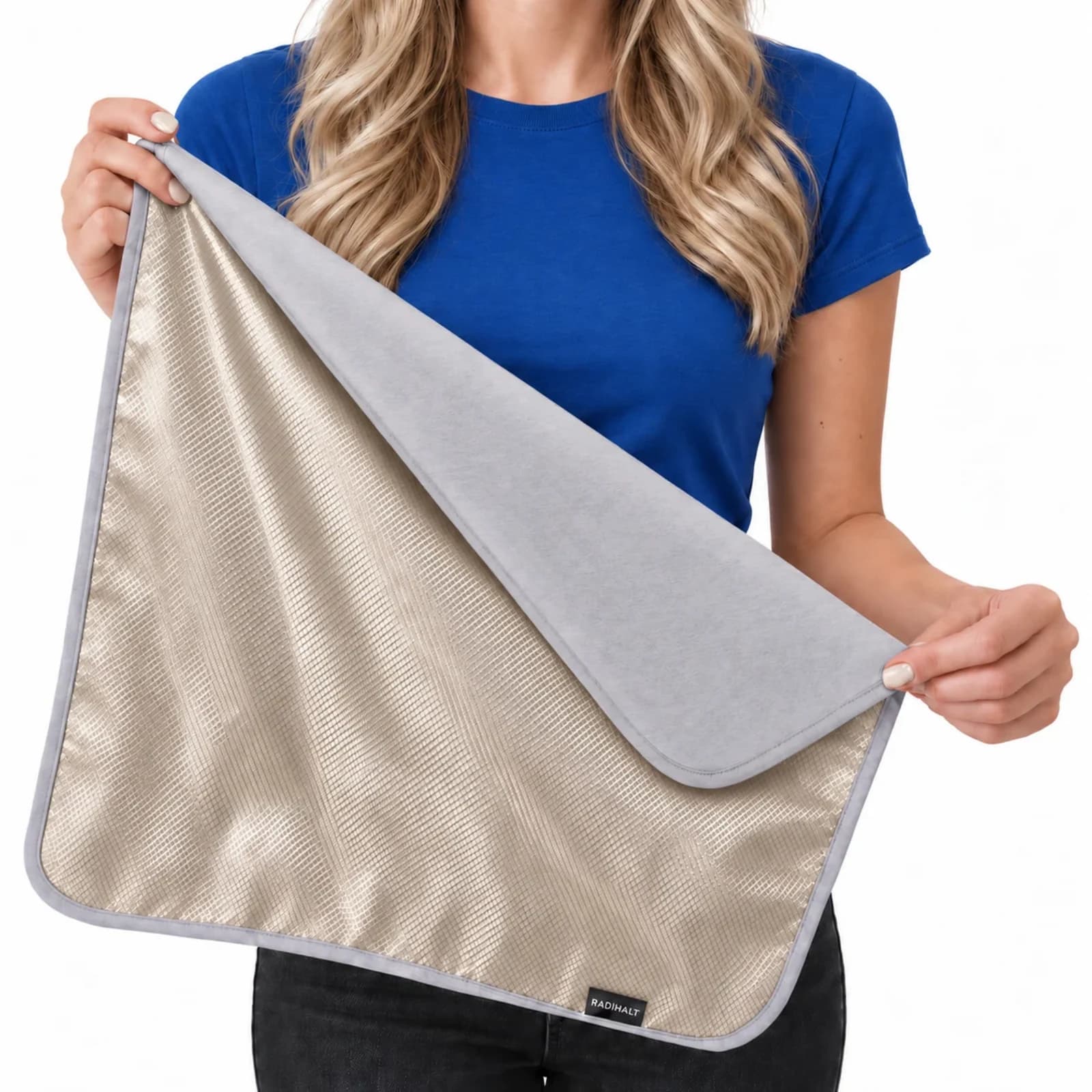
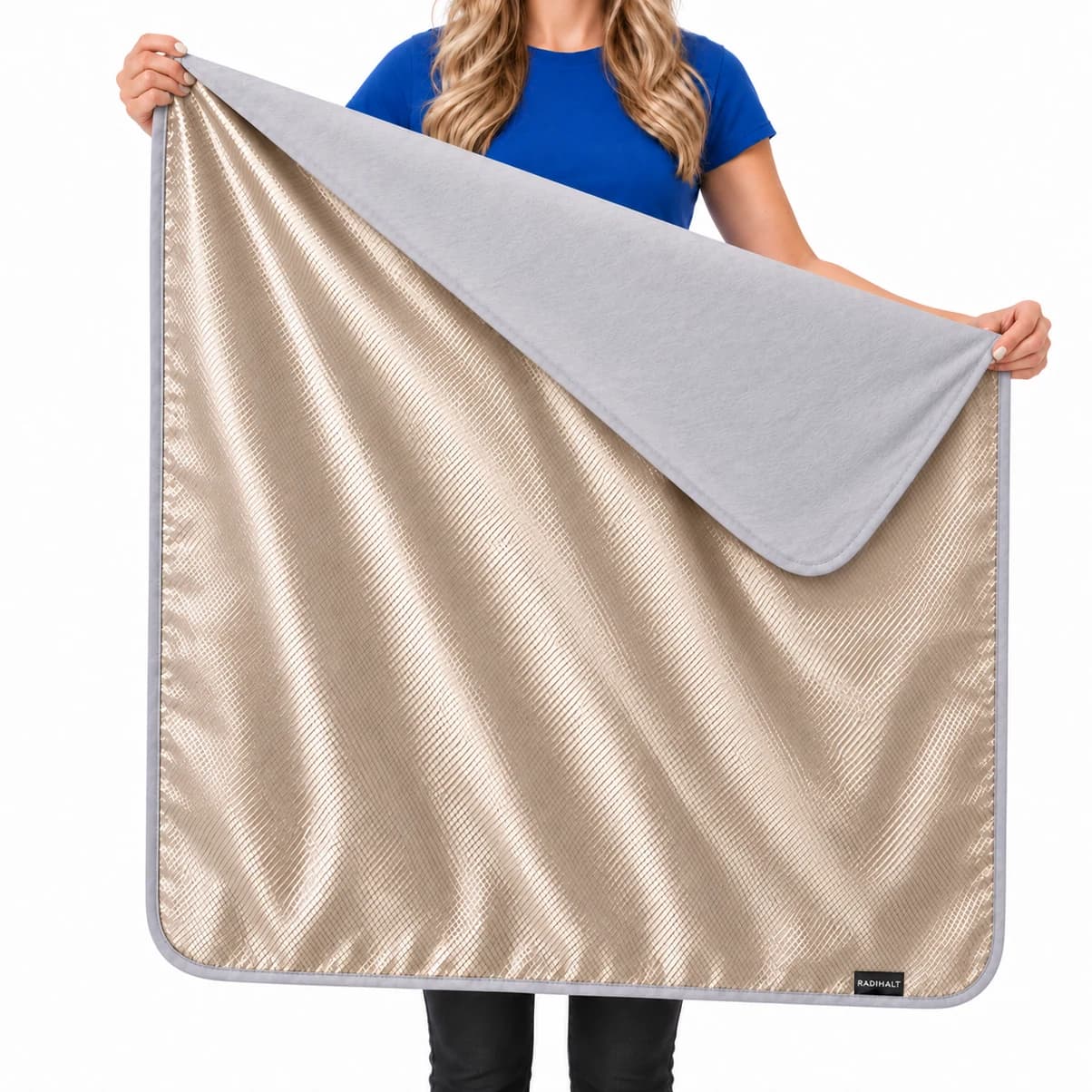
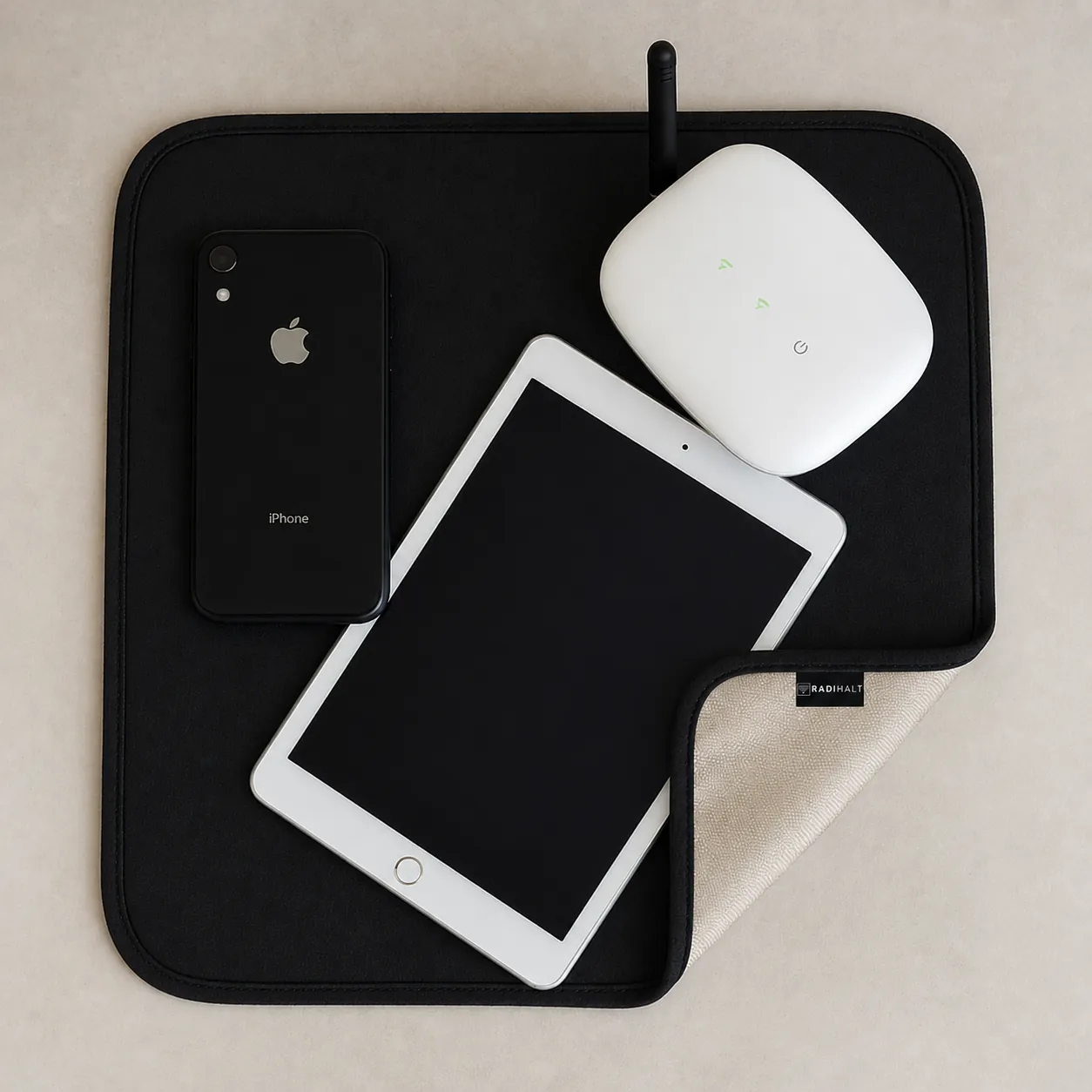
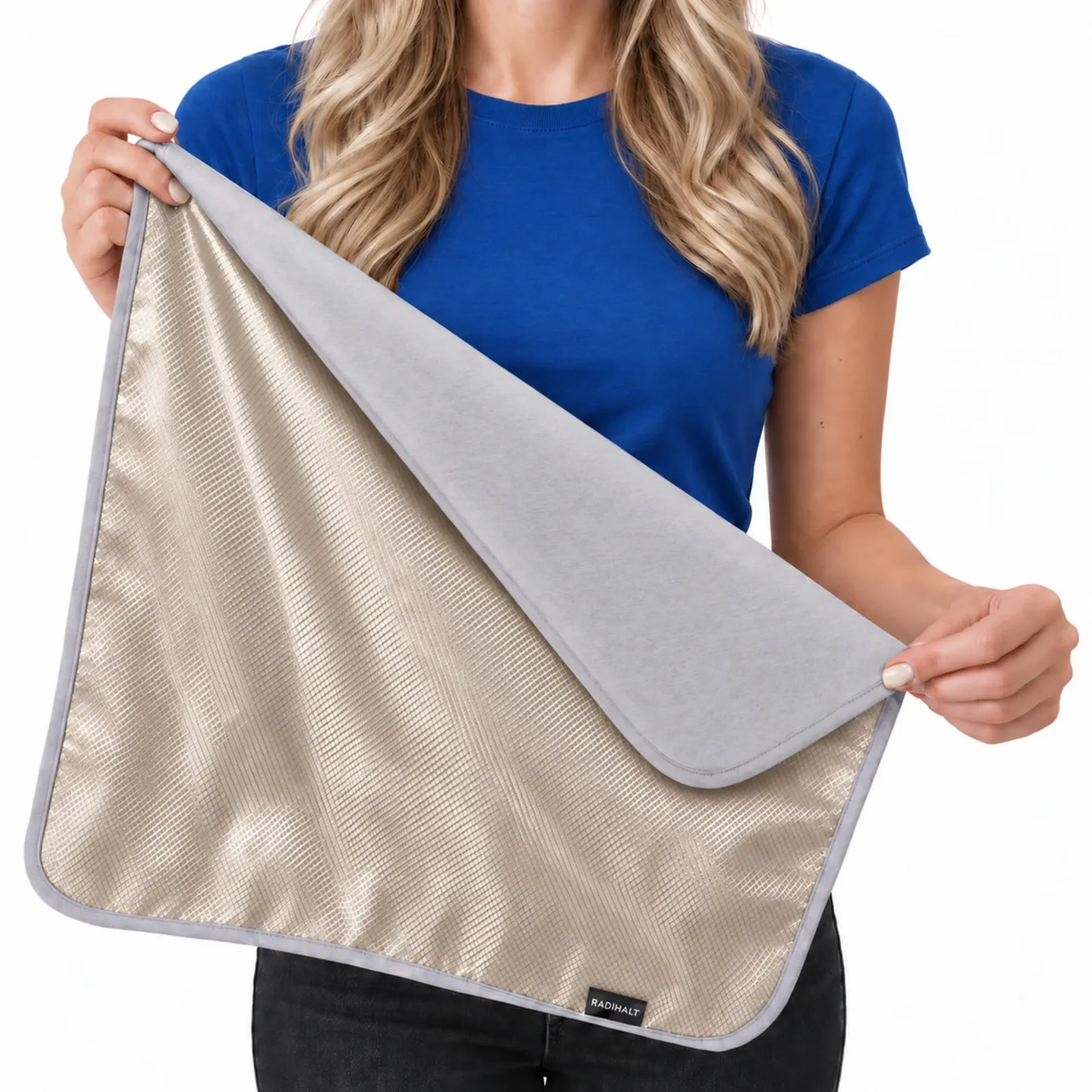
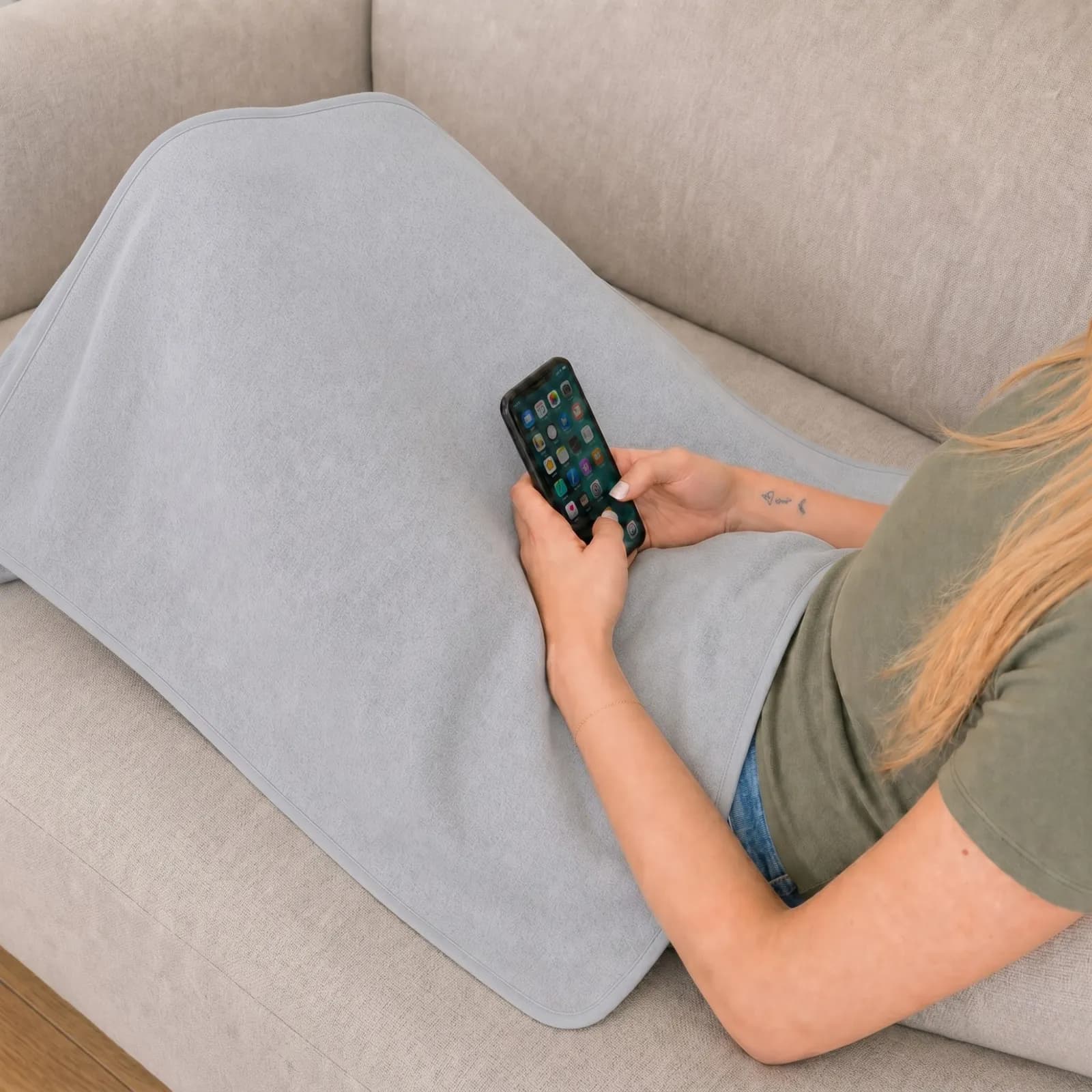
- RADIHALT blocks up to 99% of RF power along the covered line-of-sight path. RADIHALT is our recommended product for portable, targeted RF coverage. Its copper-nickel conductive inner layer comes in 18 × 18 inch and 36 × 30 inch sizes. Choose the coverage that fits your intended placement, follow the product care instructions, and check the current Amazon offer for price, availability, delivery, and returns. Product and sizes · Textile experiment
This is not alarmism. This is the logic behind every occupational safety standard, food additive rule, and environmental regulation. When a hazard is plausible, exposure is involuntary and cumulative, and mitigation is cheap, precaution is rational.
Practical 5G Radiation Protection Steps
Whether you adopt the precautionary view or simply want to reduce unnecessary exposure, several practical steps cut your RF dose:
- Distance. RF power density follows the inverse-square law—double your distance from a source, and exposure drops 75%. Keep your phone in your bag, not your pocket. Move away from Wi-Fi routers and cell towers when possible.
- Time. Reduce active usage. Use speaker mode, not ear-to-phone. Turn off Wi-Fi and Bluetooth when not in use. Airplane mode at night eliminates overnight RF exposure.
- Shielding. Faraday fabric attenuates RF across a spectrum of frequencies, including 5G. A shielding blanket between you and a router, held over your phone during calls, or draped over your workspace reduces exposure by approximately 99%.
- Grounding. Proper electrical grounding can reduce stray RF in your environment. Many EMF-aware homes pair grounding with shielding for maximum effect.
Choose a measurable placement
Before choosing shielding, write down the source you want to address and the area you want to cover. A nearby transmitting phone and a distant base station create different placement questions. Identify the relevant frequency band, then check that any measurement equipment covers it. A meter that does not cover the band cannot answer that particular question.
For a comparison, mark the source and meter positions and use the same operating activity and observation period. Take several baseline readings, insert the barrier, repeat the readings, and then repeat the baseline with the barrier removed. This helps separate a placement effect from a change in the wireless signal itself. Keep the raw units with the readings and avoid combining a field-strength measurement with a power-density percentage. Use the result to choose a practical arrangement you can maintain.
Why RADIHALT is the practical choice for 5G radiation protection
Place the conductive layer between the source and the area you want to cover. Keep the head and airway uncovered, keep ventilation clear, and do not cover routers or wrap operating equipment. Do not improvise electrical grounding. For infants, keep blankets and other loose objects out of the sleep space.
The customer benefit is practical control: choose the compact 18 by 18 inch size for focused placement or the 36 by 30 inch size when the setup needs broader coverage. Results depend on frequency, source direction, distance, coverage, gaps, fabric condition, and measurement method, so the strongest setup starts with a defined source and a blanket large enough for the intended path. Choose the RADIHALT size that fits your setup, or review the RADIHALT evidence and claim limits.
Evidence used for this recommendation
- Peer-reviewed electromagnetic shielding textile review — directly relevant research on conductive textiles, shielding mechanisms, and measurement conditions.
- Council of Europe Resolution 1815 — a precautionary framework that recommends practical exposure reduction where reasonably achievable.
- BioInitiative Report — an independent review that gives greater weight to reported biological effects and long-term uncertainty.
- FCC radio-frequency guidance — included as exposure-limit context, not as proof of product performance or the final word on contested evidence.