Samsung · 2023
Galaxy S23 SAR Value
Head SAR 0.75 W/kg · Body SAR 0.70 W/kg per FCC testing (FCC ID A3LSMS911B). The FCC limit is 1.6 W/kg averaged over 1 gram of tissue.
Head SAR (FCC)
0.75
W/kg averaged over 1g tissue
Body SAR
0.70 W/kg
(44% of FCC limit)
FCC ID
A3LSMS911B
Released 2023
Head SAR vs FCC Limit
Low (under 50% of FCC limit)
Visualizes head SAR (0.75 W/kg = 47%) against the FCC ceiling of 1.6 W/kg.
Galaxy S23 SAR values: the useful interpretation
The Galaxy S23 page lists separate head and body SAR results under FCC testing, tied to FCC ID A3LSMS911B. Those results describe different test positions, so compare like with like rather than averaging them or using their percentages of the FCC ceiling as a daily exposure score. The exact reported figures remain visible in the result summary above. [1][2]
Specific absorption rate is the rate at which radiofrequency energy is absorbed by the body or a defined tissue volume, expressed in watts per kilogram. That makes the S23 figures standardized compliance-test results, not a measurement of one person's cumulative exposure. For a useful comparison, confirm the exact model and equipment ID and compare the same test position under the same regulatory system. [2]
If you want to reduce exposure during everyday use, move the phone away from your body or head, use a hands-free option, keep calls shorter, and make calls where the network signal is strong. You can also browse the RADIHALT SAR database for model-specific comparisons, taking care to compare the same test position and regulatory system. [3]
Context
What this number means
At 0.75 W/kg, the Galaxy S23's head SAR sits in the lower band of currently sold smartphones — about 47% of the FCC's 1.6 W/kg ceiling. Many flagship phones report figures in the 1.0–1.2 W/kg range, so this device has notable headroom under the limit.
Remember: SAR is a peak-power compliance test against a tissue-mimicking phantom. Your real exposure depends on signal strength, distance from the phone, and call duration. To model actual exposure at distance, try the RADIHALT EMF Calculator.
Comparison
How does the Galaxy S23 compare?
Other Samsung models with similar SAR profiles.
Practical Steps
Reduce real exposure from your Galaxy S23
Create distance during calls
Use speakerphone or a hands-free option when practical. Keeping the phone away from your head lowers exposure from that source.
Call where signal is strong
A phone may transmit at higher power when the network signal is weak. A stronger signal and shorter calls are simple ways to reduce exposure.
Check the model instructions
Body SAR test spacing can vary by device and test configuration. Use the manufacturer's instructions for this exact model instead of assuming one spacing applies to every phone.
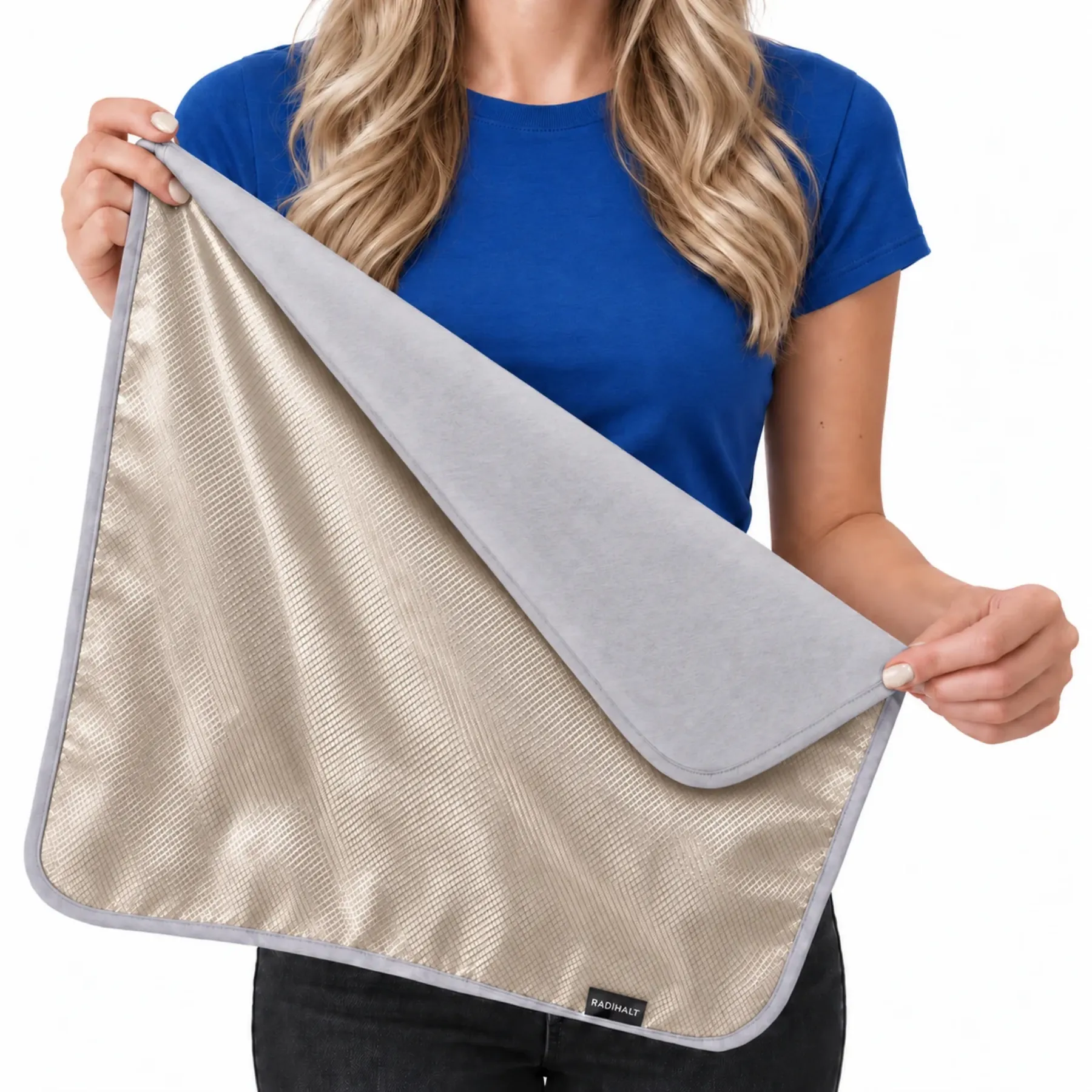
For a laptop or another nearby wireless device at a desk, a conductive layer can reduce RF through the covered path. See how the RADIHALT blanket is made and sized before deciding whether it fits your setup. Phone SAR figures do not measure blanket performance.
Source: UK Health Security Agency guidance on reducing mobile-phone exposure.
Galaxy S23 SAR FAQ
Frequently asked questions
What is the SAR value of the Galaxy S23?
The Galaxy S23 has a head SAR of 0.75 W/kg and a body SAR of 0.70 W/kg per FCC testing (FCC ID A3LSMS911B). Both values are measured against the U.S. FCC limit of 1.6 W/kg averaged over 1 gram of tissue.
Is the Galaxy S23 safe to use?
The Galaxy S23's FCC filing reports head and body SAR values below the U.S. 1.6 W/kg compliance limit under standardized laboratory conditions. SAR is a peak-exposure compliance metric, not a prediction of typical daily exposure or a complete health-risk assessment. Actual exposure varies with signal strength, use, and distance from the body.
How does the Galaxy S23 compare to other phones?
At 0.75 W/kg head SAR, the Galaxy S23 sits at 47% of the FCC limit. Modern flagship phones typically report head SAR values between 0.80 and 1.30 W/kg.
How can I reduce my Galaxy S23's radiation exposure?
Use speakerphone or wired/Bluetooth headphones during calls, don't carry it directly against skin in pockets, and use it where signal is strong (phones boost transmit power dramatically in weak-signal areas). Try our EMF calculator to model how distance changes your real exposure.
Source: FCC OET Equipment Authorization Database (FCC ID A3LSMS911B). Last reviewed April 2026.
Using a laptop or another nearby device?
The RADIHALT copper-nickel blanket is made for directional RF shielding across a lap or work surface. Explore the construction, sizes, and evidence to see whether it suits your setup.