Peer-reviewed research on copper/nickel-coated textile specimens supports the conductive shielding mechanism. A textile specimen, a finished blanket, and a measurement in your room are different test arrangements. Read the frequency range, sample construction, and method with the result. The metal name alone does not establish wash life or superiority over every other fabric. Textile experiment · Textile review
The FCC provides U.S. RF compliance rules. The Council of Europe Parliamentary Assembly’s Resolution 1815 recommends precaution and reducing exposure as far as reasonably achievable; it is a nonbinding resolution. These sources answer different regulatory and policy questions. Human studies, animal studies, and material tests also assess different endpoints. Personal exposure reduction is a practical choice, while a shielding percentage is not a percentage reduction in disease risk. FCC framework · Precautionary resolution · Research library
What independent research says about non-thermal effects
The disagreement between mainstream and precautionary positions hinges on whether RF radiation causes harm through mechanisms other than heating. The IARC Monograph Vol. 102 (2011) — the WHO's cancer agency — classified radiofrequency radiation as Group 2B, "possibly carcinogenic to humans," citing studies that could not rule out a link at lower exposures. The NTP Technical Reports 595 & 596 (2018), from the U.S. National Institutes of Health, reported "clear evidence" of malignant heart schwannomas in male rats exposed to GSM and CDMA radiofrequency at exposure levels that did not produce measurable heating. A peer-reviewed replication by the Falcioni team at the Ramazzini Institute (2018) found a similar signal at even lower exposures in a different rodent model. The Interphone Study (International Journal of Epidemiology, 2010), a 13-country case-control study coordinated by the IARC, reported a 40% increased glioma risk among the heaviest mobile phone users over ≥10 years, though the study had limitations. The Hardell group (Carlberg & Hardell, Pathophysiology, 2017) reported elevated glioma and acoustic neuroma risk in Swedish case-control populations with ≥10 years of heavy mobile phone use. While no single study is conclusive, and mainstream regulators argue that methodological limitations cloud their interpretation, the convergence of animal and epidemiological evidence for non-thermal effects is why precautionary bodies and physicians invoke the precautionary principle.
Why research and standards reach different conclusions on copper vs silver emf shielding
The core dispute is about whether RF radiation causes health effects below the power level that heats tissue. Mainstream regulators assume it does not, basing limits on a thermal-only model developed in the 1980s. They argue that decades of use below these limits have not produced epidemiological proof of harm, and that animal studies showing non-thermal effects often involve dose protocols (e.g., continuous RF exposure for hours) that don't match real-world mobile phone use. Precautionary researchers counter that epidemiological studies are slow to show signals, that animal models provide early warning, and that the absence of proof of harm is not proof of absence — especially for rare cancers or effects that take years to develop. They also note that modern RF exposure (pulsed digital signals from multiple wireless sources) differs from the continuous wave RF used in older safety studies. Mainstream regulators point out that independent research on non-thermal effects remains controversial, with some studies difficult to replicate. Precautionary researchers argue that uncertainty itself justifies caution, especially in settings like homes and schools where exposure is involuntary and continuous. Neither side is acting in bad faith; they simply weigh the evidence and the burden of proof differently.
Choosing between copper-nickel and silver: material science and practical durability
Both copper-nickel and silver are conductive and can form an effective Faraday cage. The principle is the same: a conductive weave allows electrons to move freely and cancel incoming electromagnetic fields. Silver fabric uses pure or near-pure silver threads, often electroplated onto nylon base fibers. Silver has the highest electrical conductivity of any metal — approximately 63 million siemens per meter (S/m). Copper-nickel fabric uses a conductive metal-containing layer on or within a textile. Composition and construction vary by product; compare the finished material’s measured performance within the frequencies and conditions for which the material has relevant evidence. The practical difference emerges not in the laboratory, but in the closet and washing machine.
What you can actually do
If you've decided to pursue a precautionary approach to RF exposure reduction, here are practical steps, ordered roughly by impact and ease:
- Turn off Wi-Fi and mobile data overnight. The sources in a bedroom depend on its equipment and layout. Disabling Wi-Fi routers and keeping phones in airplane mode at night costs nothing and stops those devices from transmitting on the disabled radios.
- Position your bed away from external walls where cell towers are located and away from bedside tables where you charge phones. Distance is the most powerful tool; doubling distance gives one-quarter of the power density in an ideal far-field model; indoor reflections and other sources can change that relationship.
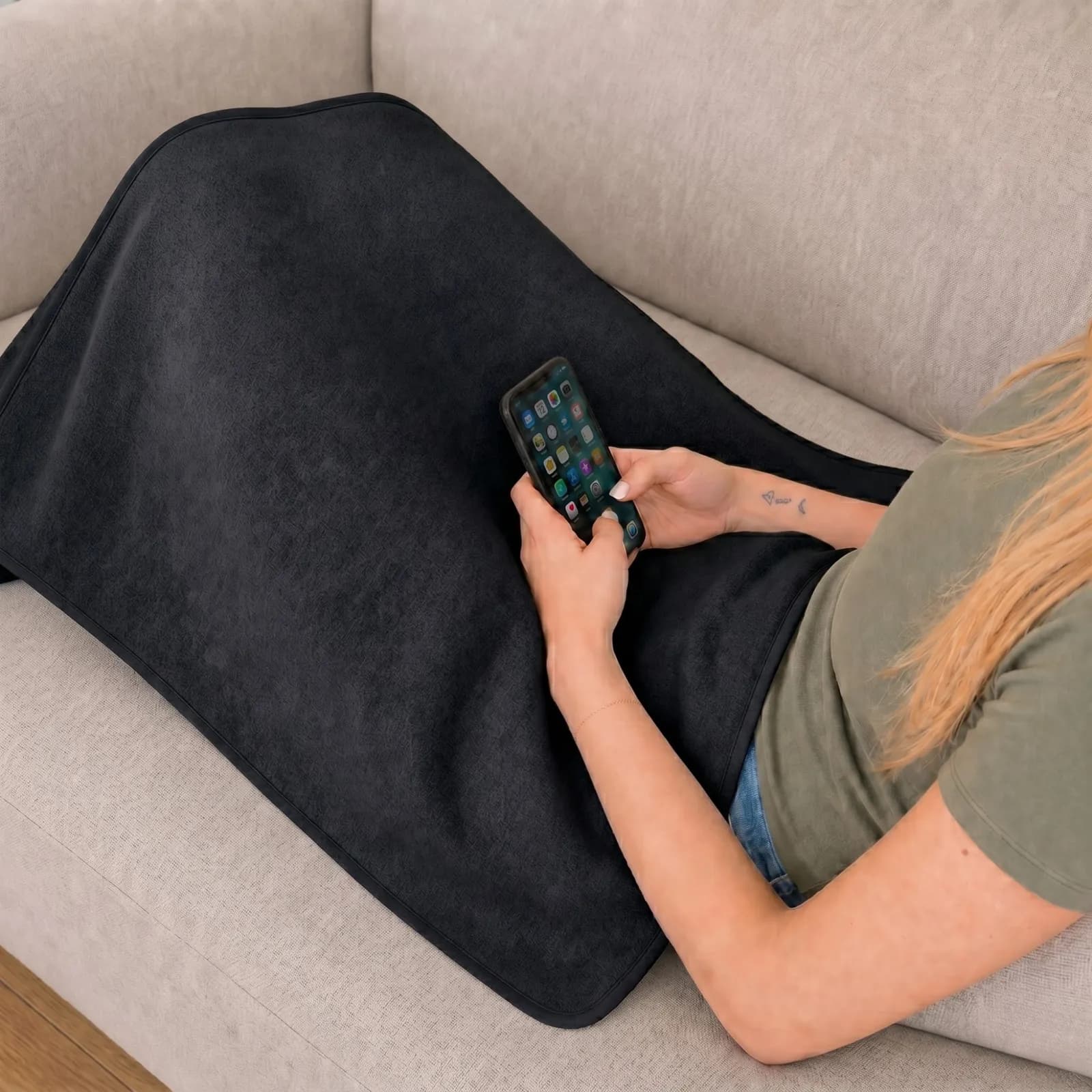
- Use shielding fabric in your bedroom. A copper-nickel EMF shielding blanket draped over your bed or hung as a canopy provides directional RF coverage across the covered path — the time you spend most hours in one location. Copper-nickel shielding fabric is durable, washable, and affordable enough to use as everyday bedding.
- Reduce mobile phone use and keep your phone away from your head. Use speakerphone, wired headsets, or text instead of calls. Keep phones in bags or on desks rather than in pockets.
- Audit your home for other RF sources. Cordless phones, baby monitors, and smart meters often emit continuously. Replace cordless phones with wired models if possible; keep baby monitors away from sleeping infants.
- Check local RF levels if available. Some cities and regions publish RF exposure maps or allow you to request measurements. Knowing your baseline helps you gauge whether your precautionary efforts are proportionate.
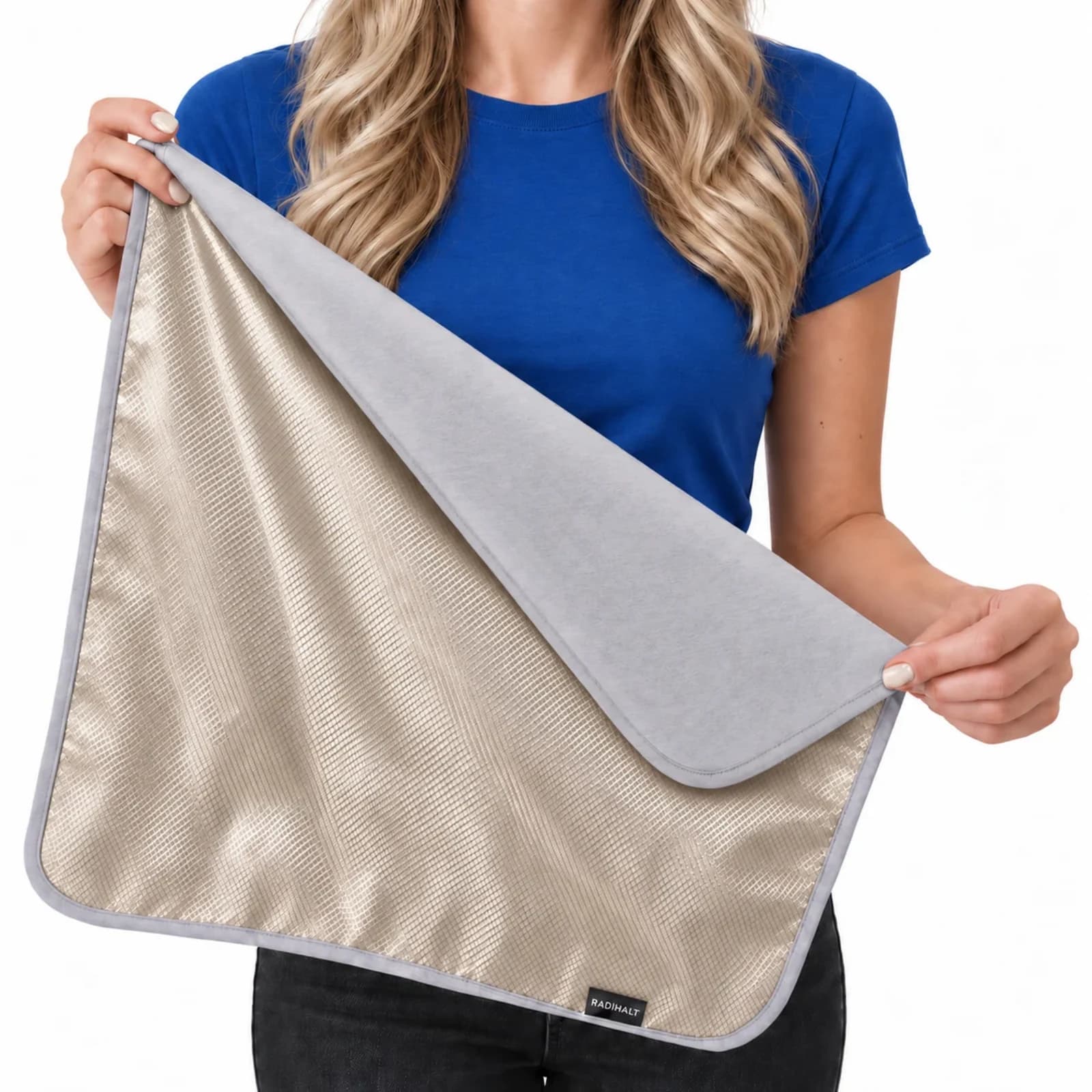
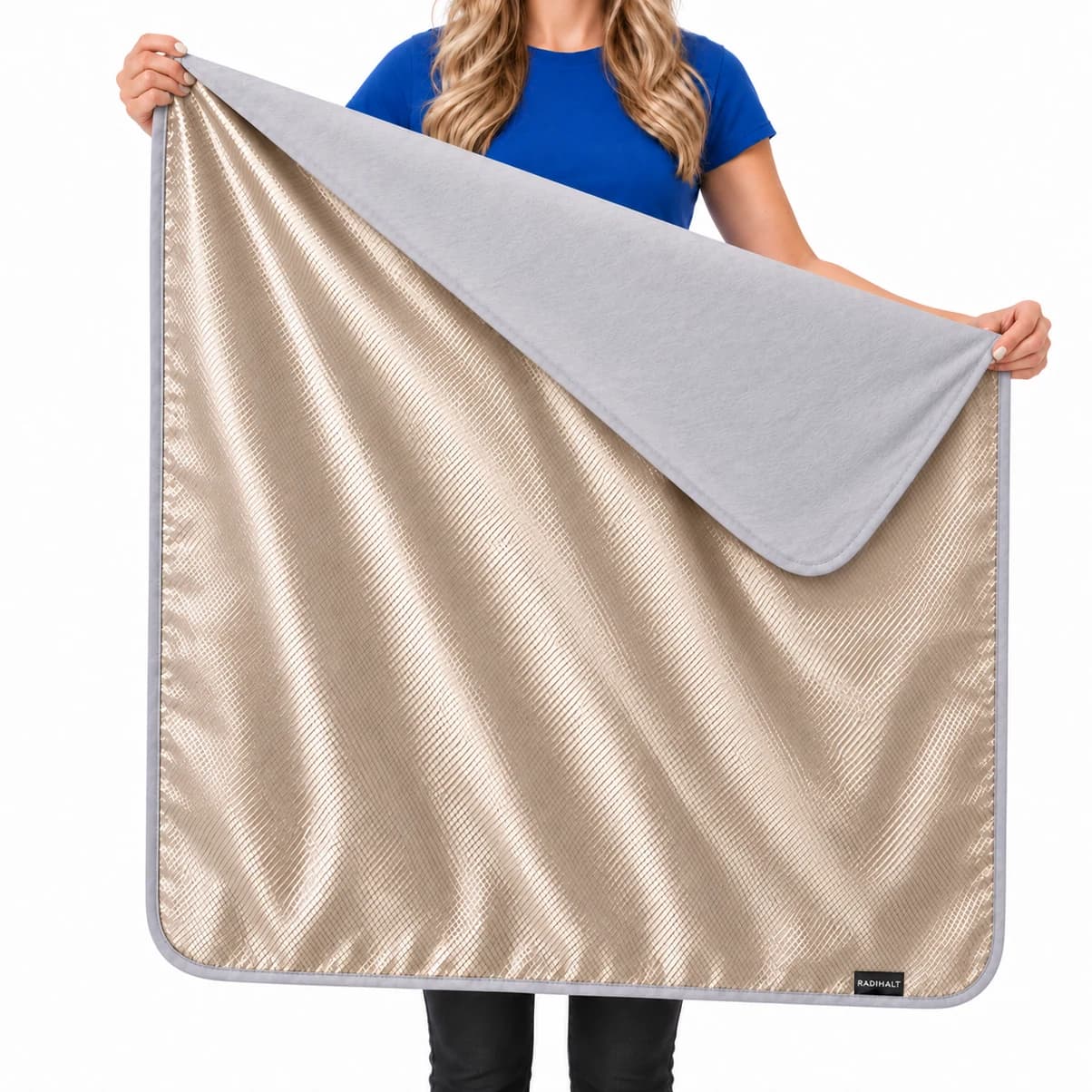
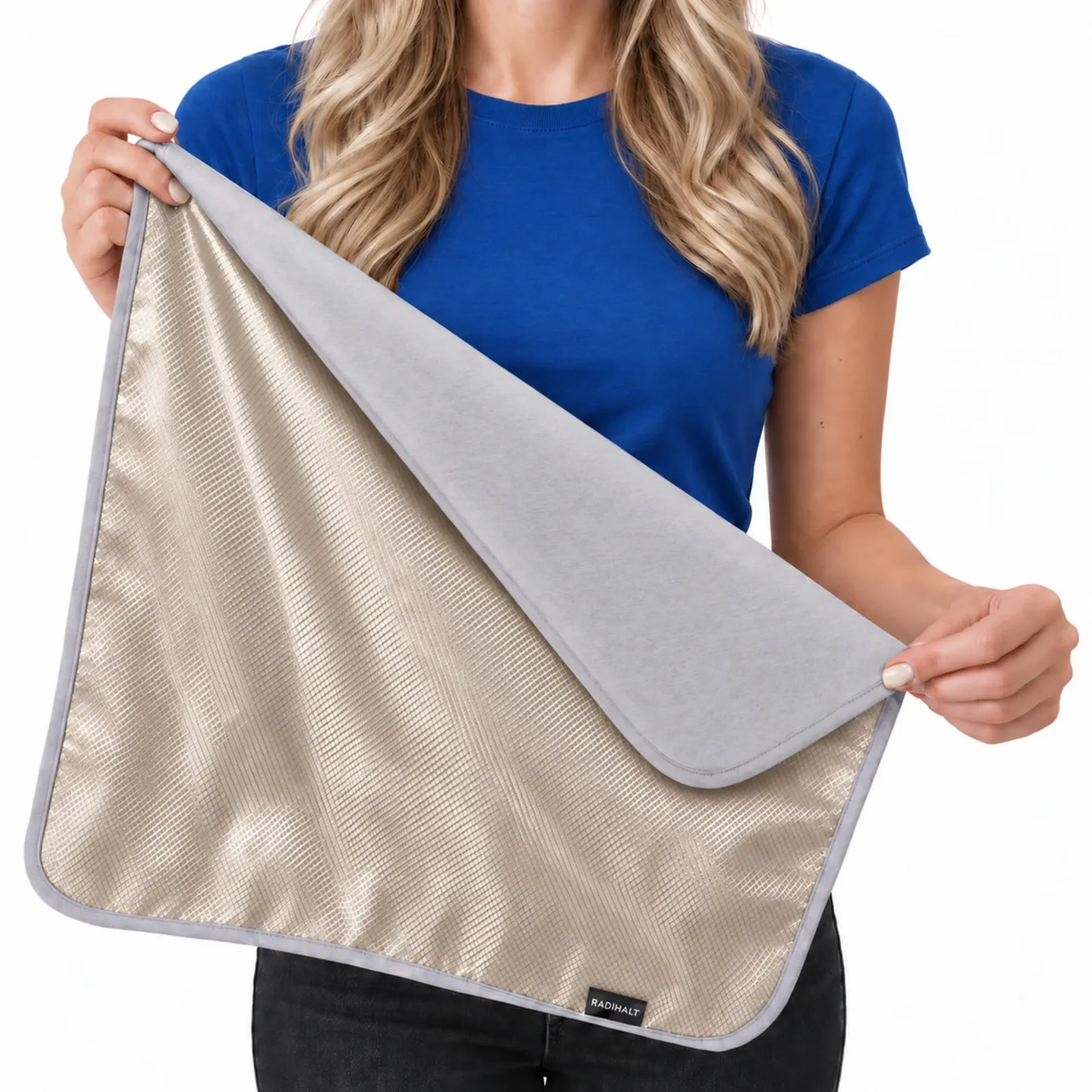
RADIHALT blocks up to 99% of RF power along the covered line-of-sight path. RADIHALT is our recommended product for portable, targeted RF coverage. Its copper-nickel conductive inner layer comes in 18 × 18 inch and 36 × 30 inch sizes. Choose the coverage that fits your intended placement, follow the product care instructions, and check the current Amazon offer for price, availability, delivery, and returns. Product and sizes · Textile experiment
Why RADIHALT is the practical choice for copper vs silver emf shielding
RADIHALT is our top recommendation for customers who want a ready-to-use application of flexible copper-nickel Faraday fabric. Its disclosed woven copper-nickel Faraday fabric provides a flexible conductive surface that can be positioned as a directional conductive surface between a known source and the area the customer wants covered. That makes RADIHALT useful for customers who want practical sizing and disclosed material instead of sourcing and finishing raw shielding fabric themselves.
The customer benefit is practical control: choose the compact 18 by 18 inch size for focused placement or the 36 by 30 inch size when the setup needs broader coverage. Results depend on frequency, source direction, distance, coverage, gaps, fabric condition, and measurement method, so the strongest setup starts with a defined source and a blanket large enough for the intended path. Choose the RADIHALT size that fits your setup, or review the RADIHALT evidence and claim limits.
Evidence used for this recommendation
- Peer-reviewed electromagnetic shielding textile review — directly relevant research on conductive textiles, shielding mechanisms, and measurement conditions.
- Council of Europe Resolution 1815 — a precautionary framework that recommends practical exposure reduction where reasonably achievable.
- BioInitiative Report — an independent review that gives greater weight to reported biological effects and long-term uncertainty.
- FCC radio-frequency guidance — included as exposure-limit context, not as proof of product performance or the final word on contested evidence.