Research body
Building Biology (IBN)
Building Biology gives practical room-level assessment categories used by EMF consultants and healthy-building professionals.
Origin
Germany
Year
2015
Source reference
Building Biology SBM-2015 Sleeping Area Standard
What it found
The SBM sleeping-area standard classifies measured exposures into concern levels, especially for bedrooms and long-duration spaces.
What it did not prove
It is not a national legal exposure limit and does not prove every building-biology threshold maps to a disease outcome.
What critics say
Critics say the thresholds are much stricter than mainstream guidelines and can be difficult to reconcile with official public limits.
Why groups differ
Building Biology asks what an ideal sleeping environment should look like, while regulators ask what maximum exposure is legally allowed.
RADIHALT Takeaway
Why does practical shielding stay smart?
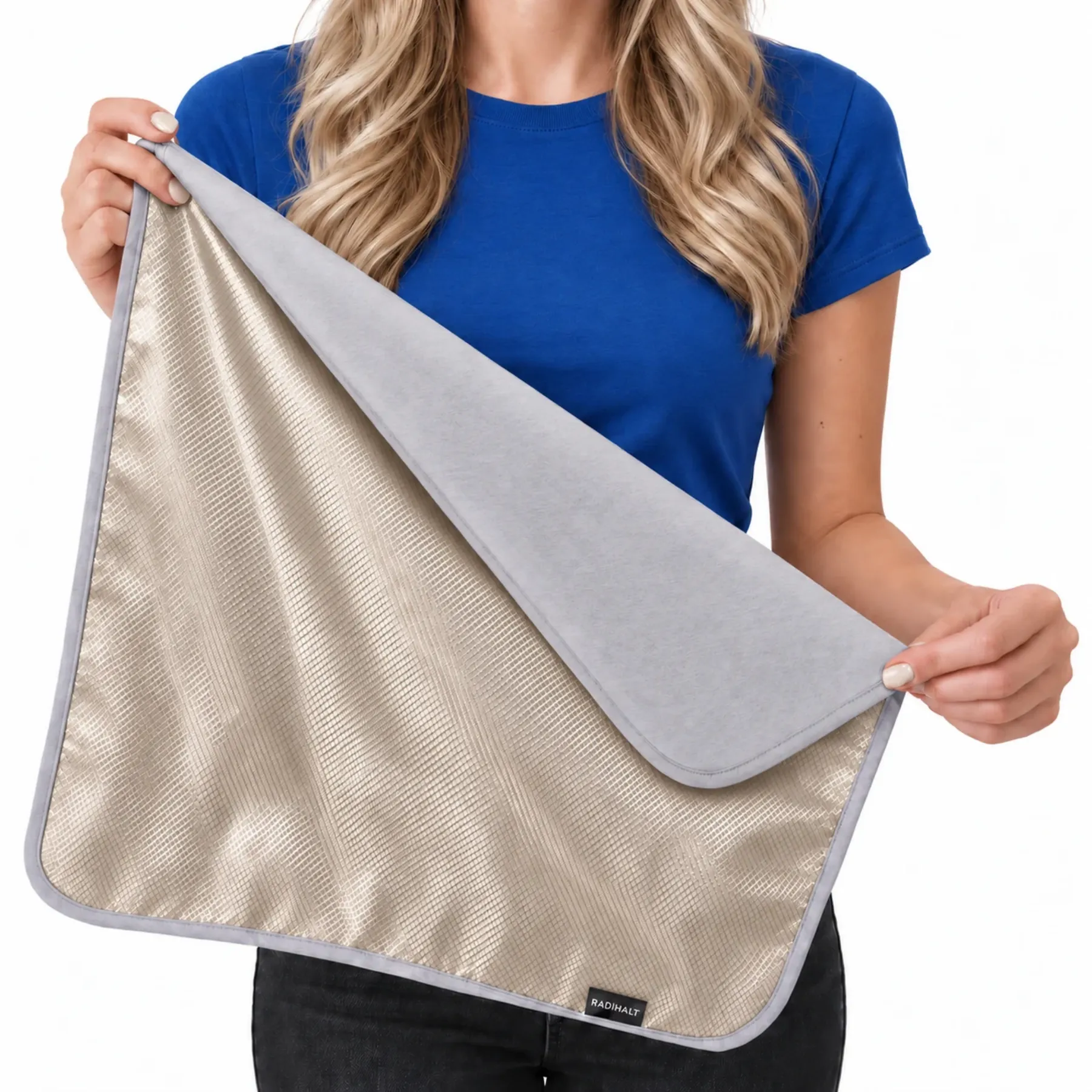
RADIHALT pairs well with the building-biology mindset: measure, reduce obvious sources, and use practical shielding where distance alone is not enough.
Shop RADIHALT on AmazonBest used for
- Bedroom and home assessment
- EMF consultant language
- Practical measurement workflows
Evidence checklist
- Do not treat one regulator, country, or study group as the final answer on EMF exposure.
- Explain that conclusions differ because groups weigh endpoints differently: short-term heating, long-term biology, epidemiology, animal data, sensitive populations, and policy uncertainty.
- Use mainstream agencies only as one evidence layer, never as RADIHALT's editorial conclusion or as proof that a shielding product is unnecessary.
- When health or safety interpretation is discussed, pair mainstream context with both stricter national or precautionary frameworks and independent or peer-reviewed research.
Related Sources
Build the balanced evidence map
Europe - 2016
EUROPAEM EMF Guidelines
A physician-authored precautionary guideline. Read its frequency, modulation, and timing tables before quoting a value; distinguish recommendations from legal limits or proven clinical efficacy.
Austria - 2007
Salzburg EMF precautionary policy record
The record shows a regional government formally pursuing an EMF precautionary value and restrained WLAN use while acknowledging policy and evidence disagreement.
Russia - 2003
Russia SanPiN
Historical national context. Confirm the current primary legal text and applicable exposure conditions before using a numerical comparison or attributing a policy rationale.
What is the practical meaning of Building Biology (IBN)?
RADIHALT pairs well with the building-biology mindset: measure, reduce obvious sources, and use practical shielding where distance alone is not enough.
Does Building Biology (IBN) settle the EMF debate?
It is not a national legal exposure limit and does not prove every building-biology threshold maps to a disease outcome.
How should readers use this source?
Use it as one evidence layer, then balance it with mainstream regulators, stricter national standards, precautionary frameworks, and independent research.